Search Results
Search this site
69 results found with an empty search
- Episode 57: Chronic Pain & ADHD: Janet Jay Explains How Community Support Makes Life Easier
Featuring: Janet Jay, writer and advocate exploring intersection of chronic pain, ADHD, and community care How do you navigate life when your body and your brain aren’t cooperating & there’s no system in place to provide support? In this episode, we explore: Chronic Pain & ADHD Overlap between chronic pain and ADHD Adult ADHD diagnosis and identity shift Navigating Systems Barriers within the healthcare system Using technology/AI to manage care and information Community & Support Community as a survival tool Finding and building supportive networks Coping & Regulation Practical coping tools and workarounds Creative practices as regulation (knitting, art, movement) Life Integration Parenting, emotional regulation, and nervous system support Grief, resilience, and meaning-making Building a life that works with your limitations, not against them Key Questions Answered in the Audio: How do you build a meaningful life when your body and brain both create barriers? What actually helps when the healthcare system fails you? How do you find (or build) community that truly gets it? Resources Mentioned: JanetJay.com (blog, tools, and upcoming projects) The US Pain Foundation + The Invisible Project magazine: https://uspainfoundation.org/ Our Painful Truth Podcast: https://www.youtube.com/@OurPainfulTruth Connect With Us! ndreportpod.com Follow us on socials @NDreportpod
- Episode 56: Jocie & the CVNTs: Craftivism, Crochet, and Coordinating Direct Actions
What happens when your softness isn’t perceived as a weakness but your strategy for sustainability? This episode challenges the idea that activism has to be loud, dangerous, or perfect to make a difference. In this episode, we explore: Women’s Work is Political: Jocie breaks down how reclaiming knitting as activism is both intentional and disruptive. Small Impact Still Counts: From classrooms to community hats, we assert that changing even one life is meaningful & why quantitative scale isn’t the only measure of impact. "Everyone is big enough to do something" Framework from Mister Rogers: Craftivism becomes an accessible entry point for people who can’t engage in traditional activism but still want to contribute in tangible ways. Protecting Your Peace: We talk about perfectionism, the “digital HOA,” and how fear of doing it wrong stops people from doing anything at all. Key Questions Answered in the Audio: Is craftivism “enough” to make a real difference? How do you contribute to change if your body/brain/nervous system can’t tolerate traditional activism? What does a sustainable craftivism practice actually look like? Looking for Jocie & The CVNT Collective? CVNT Collective – https://cvntcollective.org Instagram: @cvnt.collective Join our crafting community: https://www.facebook.com/groups/1827428261337223 Donate, shop, craft, or share to support the mission! Connect With Us! ndreportpod.com Follow us on all the socials @NDreportpod
- Episode 51: Am I Neurodivergent?
Struan's Story of Diagnosis & Identity Reformation Featuring: Struan Mackenzie, former UK civil servant & creator of the YouTube channel Am I Neurodivergent? This is a conversation about burnout, identity collapse, and reformation. In this episode, we explore: The Late Diagnosis: From a stress breakdown to a deep dive into autism research. Struan suddenly realized that his entire life made sense. The Identity Reformation: Another non-linear journey of diagnosis. Struan transitioned from ASD to combined-type ADHD, and eventually discovered AuDHD. He shares how each diagnosis both clarified and destabilized his sense of self, including the process of deconstructing internalized ableism. Protecting Your Peace: Struan discusses scripting work meetings for hours during COVID and redefining his relationship with alcohol and social energy. He’s learning to honor his nervous system instead of pushing through it. The Unexpected Human Detail: Struan reflects on childhood quirks, like lining up toy cars in perfect order or hiding inside a bookcase. These behaviors went unrecognized at the time but now read like a neon sign for autism. Key Questions Answered in the Audio: Why were so many high-achieving neurodivergent adults missed in childhood, especially in the 70s, 80s, and 90s? What does cyclical burnout actually look like, and where does it come from? How does alcohol uniquely affect autistic and ADHD nervous systems, and why does the crash hit so hard? Looking for Struan? YouTube Channel Connect With Us: Website @NDreportpod on all the socials! Understanding Neurodivergence Neurodivergence is a term that encompasses a variety of neurological differences. This includes autism, ADHD, dyslexia, and more. Each of these conditions presents unique challenges and strengths. Understanding these differences is crucial for fostering a supportive environment. The Importance of Late Diagnosis Many neurodivergent individuals receive their diagnoses later in life. This can lead to feelings of relief but also confusion. For Struan, the late diagnosis was a pivotal moment. It allowed him to connect the dots of his past experiences. He realized that many of his struggles were linked to his neurodivergent traits. Identity and Self-Understanding Identity is fluid, especially for those who are neurodivergent. Struan's journey through various diagnoses illustrates this beautifully. Each label brought clarity but also new challenges. It’s essential to embrace this complexity and understand that identity is not fixed. Navigating Burnout Burnout is a common experience for neurodivergent individuals. Struan's insights into cyclical burnout shed light on this issue. Recognizing the signs of burnout can help in managing it effectively. It’s about finding balance and learning to listen to your body. Alcohol and Neurodivergence The relationship between alcohol and neurodivergence is complex. Struan discusses how alcohol affects his nervous system. Understanding this can help others make informed choices about their consumption. It’s important to prioritize mental health and well-being. Embracing Quirks Struan's childhood quirks are a reminder of the uniqueness of neurodivergent individuals. These behaviors, often dismissed, are part of what makes each person special. Embracing these quirks can lead to greater self-acceptance and understanding. Building a Supportive Community Creating a supportive community is vital for neurodivergent individuals. Sharing experiences, like Struan does, fosters understanding and reduces stigma. It’s about building connections and supporting one another on this journey. Conclusion Struan's story is one of resilience and discovery. His journey through diagnosis and identity reformation is inspiring. It reminds us that understanding ourselves is a lifelong process. We can learn from each other and grow together. In this article, I hope you found insights that resonate with your own experiences. Remember, you’re not alone in this journey. Embrace your uniqueness and continue to seek understanding.
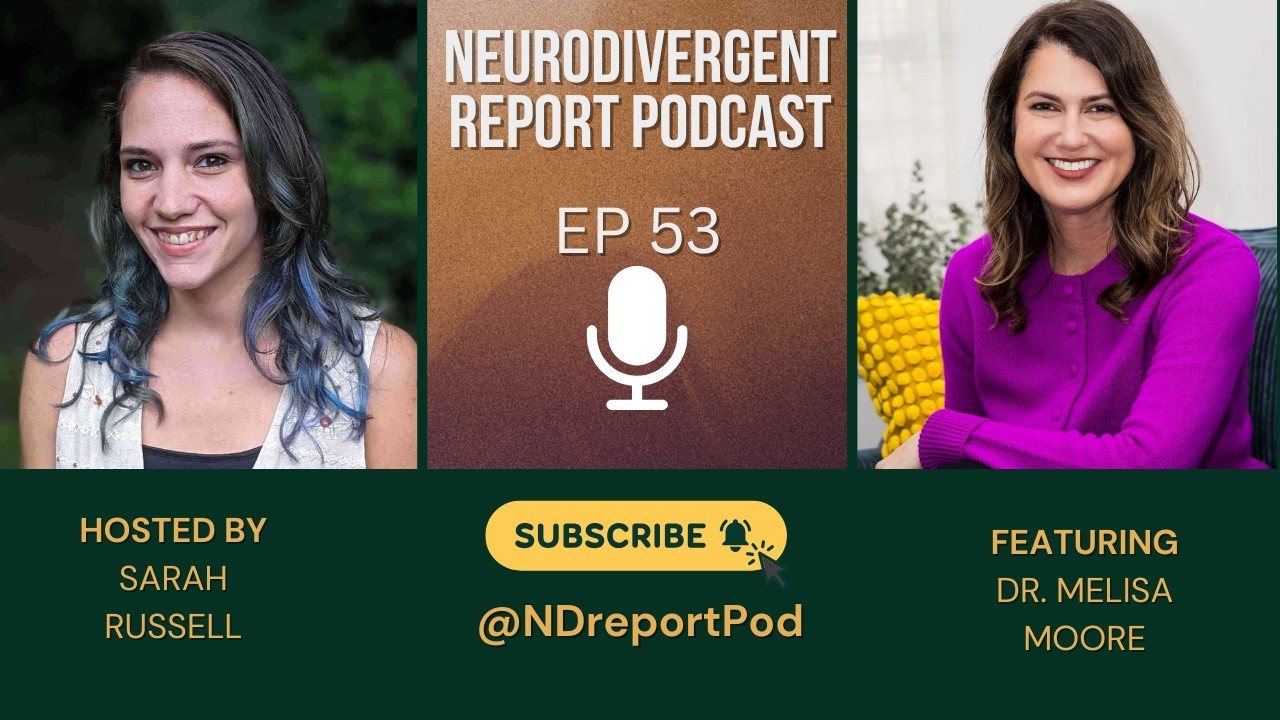
- Episode 53: Sleep Isn’t a Parenting Failure: Real Science & Flexible Solutions for Neurodivergent Kids
Featuring: Dr. Melisa Moore, licensed psychologist & board-certified behavioral sleep medicine specialist In this episode, we explore: You’re Not a Bad Parent: Is there a rational reason why I struggle with sleep routines as a parent? “Adolescent Circadian Shift”: What do child development studies tell us about early morning wake-ups for adolescents? The Five S’s to Sleep Routines : What does it actually take to build a nighttime routine for neurodivergent kids? Protecting Your Peace: How to make sure we don’t sacrifice connection for perfection at bedtime? Unexpected Human Detail: This sleep specialist tells the story of supporting her AuDHD son & his late-night snacking habit... sometimes its ok to leave your kids lemon Oreos on the nightstand Key Questions Answered in the Audio: 1. Why does traditional sleep hygiene advice often fail neurodivergent families? 2. Is screen time always the villain at bedtime or does distraction sometimes help a busy brain fall asleep? 3. How do sleep associations (like co-sleeping or listening to videos) affect middle-of-the-night wakeups? Resources Mentioned: The Good Sleep Guide for Neurodivergent Kids by Dr. Melisa Moore [https://newworldlibrary.com/product/the-good-sleep-guide-for-neurodivergent-kids] drmelissamoore.com @drmelisamoore @NewWorldLibrary Connect With Us! ndreportpod.com Follow @NDreportpod on all the socials!
- Episode 52: Ironman on the Spectrum: Training, Burnout & Proving Them Wrong w/ Adrienne Bunn
Diagnosed at four. Told what she “wouldn’t” do. Now she’s training for triathlons while juggling college, sensory needs, and full-time endurance sport. In this episode, we explore: Importance of Parental Support: Doctors predicted limits. Her parents built a support network instead. Running Changed My Life: Medication made her feel flat and lethargic. Running regulated her nervous system & finally changed everything. Color-Coded Chaos: Google Calendar. Daily check-ins. Flexible rescheduling. Protecting Your Peace: tips for managing sensory overwhelm Plastic Feet Totem: cute story about how movement + tangible goals = motivation. Key Questions Answered in the Audio: How do you train for Ironman without burning out? What does early autism support actually look like? How do you juggle school, sport, and sensory regulation without melting down? Looking for Adrienne? TriGirlAdrienne.com IG: trigirl_16 Connect with us! NDReportPod.com Follow us @NDreportpod on all of the socials!
- Episode 55: How an ADHD Entrepreneur Built the AOL Newsroom and Created Source of Sources
Featuring: Peter Shankman, entrepreneur, founder of Source of Sources, and early architect of the AOL newsroom Before the internet became corporate and slow, it was chaos... and a lot of it was built by neurodivergent brains moving fast and breaking things. Peter Shankman joins Sarah to talk about helping build the AOL newsroom, quitting the corporate meeting machine, and accidentally creating one of the most powerful media networking tools on the internet. In this episode, we explore: The First Real Job: Peter lands at America Online in the 90s (back when AOL was the internet) and helps create the AOL Newsroom by experimenting & moving fast. The Identity Shift: Next, Peter tries a traditional media job and immediately hits a wall: endless meetings, zero momentum, and a structure that was never gonna work for him. Protecting Your Peace: Find the workaround for you: if the system isn’t working, try something new. Unexpected Human Detail: Peter grew up in NYC, went to the Fame school (High School of Performing Arts) as a vocal major, sang for decades, and still wakes up around 3 AM to give his ADHD brain quiet time to think. Key Questions Answered in the Audio: Why do so many ADHD people end up building companies or working in startups? What was it actually like inside AOL when the internet was first exploding? How can creators, podcasters, and entrepreneurs get press and media attention without hiring a PR firm? Resources Mentioned: Source of Sources (SOS) – connect journalists and experts https://sourceofsources.com Peter Shankman https://www.shankman.com Follow Peter on social (@petershankman) Connect With Us! Contact Us Follow us on all the socials @NDreportpod
- Episode 50: Autism, OCD, and the Joy of Being Way Too Interested in Everything w/ Jonathan Katz-Ouziel
Featuring: Jonathan Katz-Ouziel, autistic accessibility consultant and founder of Opossum House Accessibility What happens when autism is diagnosed early, supported well, and allowed to stay joyful — and how OCD complicates (and sometimes sharpens) everything that comes after In this episode, we explore: - Early Diagnosis Moment: what it was like being diagnosed autistic at age three in the 1990s, and how access, parental belief, and early support shape sense of self - The Identity Shift: From masking in a conformist school system to reclaiming autism as something fun, social, and deeply human — while naming the privilege baked into his journey - Creating Workarounds & Framework: How OCD-driven rituals around time, sleep, and lists evolved into autistic-friendly executive function systems that actually support his work - Calming Sensory Needs: Why unmet sensory needs can amplify OCD, how light and heat regulation matter, and what it means to design life around nervous system safety - Random moments: Eggplants are botanically berries, opossums are the ultimate autistic mascot, and leaning into “cringe” is a survival strategy Key Questions Answered in the Audio: 1. How do autism and OCD interact — and when does one help or hinder the other? 2. What does accessibility actually look like beyond ramps and compliance checklists? 3. Is starting a business as a neurodivergent person empowering or a fast track to burnout? Resources Mentioned: Opossum House Accessibility (Jonathan’s consulting practice) https://www.opossumhouseaccessibility.com/ Jonathan Katz-Ouziel on LinkedIn https://www.linkedin.com/in/jonathan-katz-ouziel-cpacc-6b098334/ Connect With Us https://www.ndreportpod.com/ Follow @ndreportpod on your social platform of choice
- Episode 49: Parenting w/ Ehlers-Danlos Syndrome & Perimenopause
Ft: Karen Kossow, disability advocate, neurodivergent parent, and co-founder of Faircare Idaho What happens when parenting, disability, hormones, and burnout collide — and the systems meant to support you quietly disappear? In this episode, we explore: Brain Fog + Burnout = Breaking Point Sarah gets vulnerable about worsening brain fog and fatigue, opening a larger conversation about perimenopause, disability, and survival under constant strain. Late Recognition & Reframing Expectations Karen talks parenting autistic kids, navigating Ehlers-Danlos syndrome, and the loss of access of familiar coping mechanisms during perimenopause. The Reality of Caregiving Without Support: Why paid family caregiver programs matter, what happens when they’re cut, and how unpaid labor props up broken socioeconomic systems. Develop Self-Care Rituals: Learning to read non-verbal body signals, prioritize finite energy, and practice nervous system rest & regulation instead of pushing through. Key Questions Answered in the Audio: 1. How do I know I’m doing too much? 2. Why are families expected to survive without real systemic support? 3. What practical nervous system grounding tools actually help when you’re already overwhelmed & over-scheduled? Resources Mentioned: Karen Kossow’s Substack — Self-Care Support Squad https://karenkossow.substack.com/ Faircare Idaho (family paid caregiving advocacy) https://faircareidaho.substack.com/ Connect With Us https://www.ndreportpod.com/ Follow @ndreportpod on your social platform of choice
- Episode 48: Craft as Stimming, Craft as Repair w/ Art Therapist Lucy from Embrace This Space
Featuring: Lucy — Art therapist based in Melbourne, Australia, working at the intersection of creativity, neurodivergence, sensory regulation, and relational healing. People rarely heal by talking alone; this week, Lucy joins me to explain that slow and soft sensory practices can be the most powerful tools for nervous system repair, especially for neurodivergent people who’ve built up trauma just trying to survive without proper self-understanding. Curious What’s Inside? 1. Crafting for Nervous System Repair: how slow, tactile art forms like embroidery can support regulation, agency, and self-worth when words and traditional therapy fall short. 2. Craft as stimming: How hand-crafting creates felt-safety through rhythm, repetition, and choice. 3. Animals & Co-Regulation: Exploring how animals can buff your restoration score 4. Sensory Awareness & Grounding: Low-demand grounding practices that don’t rely on breathwork or visualization techniques Questions We Answer: - Why do some people heal more through creating art than in talk therapy? - How can craft support executive function and emotional regulation? - What makes breathwork grounding inaccessible for many neurodivergent people? - How do animals support co-regulation in therapy and daily life? - What does low-demand grounding actually look like in practice? Guest & Links Lucy, Art Therapist Instagram: @embrace.this.space Youtube: @EmbraceThisSpace Website: https://embracethisspace.com.au Pencil Dust — animated podcast about art, neurodivergence, and late diagnosis @PencilDustPod Connect With Us https://www.ndreportpod.com/ Follow @ndreportpod on your social platform of choice
- Episode 47: BCBA Ryan talks late diagnosis of Inattentive ADHD, Parenting, & Stimulant Stigma
Featuring: Ryan Baker-Barrett, BCBA — ADHD clinician, parent of neurodivergent kids, and adult diagnosed with ADHD later in life. I keep hearing stories of adults who don’t receive diagnosis until after their relationships fall apart. In this episode, Ryan Baker-Barrett shares his experience with inattentive ADHD, barriers to medication access, and what it’s like to parent neurodivergent kids while managing his own late diagnosis & private practice. Curious What’s Inside? - Late ADHD Diagnosis: Why inattentive ADHD is often missed in childhood. - Inattentive ADHD (What's it feel like?): Time blindness, hyperfocus, weak interoception, and fatigue. - Medication Access & Gatekeeping: Long waitlists, neuropsych requirements, stigma, & shortages. - Parenting With ADHD: Naming overstimulation, modeling boundaries, and letting kids see adults rest. Questions We're Answering: 1. Why does inattentive ADHD often go undiagnosed? 2. What stops adults from accessing ADHD medication? 3. How does ADHD affect parenting and emotional regulation? 4. How to practice self-compassion with ADHD? Guest & Links Ryan Baker-Barrett, BCBA Founder, Applied Behavioral Health Practice Instagram: @adhd_by_abhp Website: https://www.appliedbehavioral.health/ Connect With Us! https://www.ndreportpod.com/ @ndreportpod on your social platform of choice!
- Episode 45: 20 Years of Corporate Masking: Romina Massa's Journey
How does it feel to spend 20 years masking in the corporate world, only to have the rug pulled out the moment you finally ask for help? Romina Massa joins us to discuss her resilience story, which is still being written as we speak. Curious What's Inside? The "Reasonable" Request: Romina reveals the shockingly simple workplace accommodation she requested that led to her corporate exit. She shares why it was seen as "audacity" rather than a tool for success. The Post-Diagnosis "Switch": We discuss the frustrating and often condescending way people’s behavior shifts the moment you disclose a neurodivergent diagnosis. The Freedom of the "Outbox": How does Romina use technology to "hide" her non-traditional working hours? She believes the freelance model is often a necessity rather than a choice for neurodivergent professionals. Protecting Your Peace: Romina shares her personal mantra for setting boundaries. She explains why "I’m sorry" is usually the wrong response to an autism diagnosis. Diplomats & Drama: A look into Romina’s childhood as the daughter of a diplomat. She reflects on how her family navigated her "dramatic" traits before anyone had a name for them. Key Questions Answered in the Audio What is the one question you should always ask a friend who has just disclosed their diagnosis? Why does the 9-to-5 "creative brain" often feel like it’s whittling away to nothing? How can you tell if you are "masking" your way through your career? The Importance of Understanding Understanding the complexities of neurodivergence is crucial. It helps us create a more inclusive environment. When we acknowledge these differences, we foster acceptance and support. This understanding can lead to meaningful conversations and connections. Resources Mentioned Kaboose Romina Massa on LinkedIn Romina Massa on Instagram Romina Massa's Website Connect With Us! Stay connected! Visit us at The Neurodivergent Report or follow @ndreportpod on your social platform of choice! Romina's story is a powerful reminder that asking for help is not an act of audacity but a step towards authenticity. If you’re navigating similar challenges, remember, you’re not alone. Embrace your journey, and let’s continue to support one another.
- Repurposing Maslow's Hierarchy of Needs
What is this tool? Homage to Maslow's Hierarchy of Needs As with most foundational psychologists, Maslow is not without criticism. That said, all I really know about him is that an article he wrote, "A Theory of Human Motivation" (1943) was used to create the pyramidal hierarchy of needs graphic that I know and love today. Learn to practice Bottom-Up Body Scans START reflecting at Layer 1: Physical Survival Have you eaten recently? Thirsty? Running on 5 hrs of sleep? Uh-oh! Sounds like this level might be "UNSTABLE" Remember: if your basic physical needs are not met, you will be less able to perform tasks in the higher levels of the hierarchy. Not because there's something wrong with you, but because your foundation is not stable. PLEASE let go of expectations for Layers 4, 5, and 6 for the day. CONTINUE reflecting through each level, to assess which physiological needs you might want to focus on fulfilling for the day! There's nothing worse than spending a whole day trying to solve the wrong problem. Neurodivergent-Friendly Visual Validation & Prioritization Tool: Sometimes the brain is like "no, I won't be doing that right now or ever, thanks for asking." The built-in visualization for marking a level "unstable," (where the upper layers become faded and get a red border) validates that visceral feeling of "I can't even..." This tool isn't about trying to have a perfect pyramid every day; it’s merely an assessment tool to practice finding the stressor that is impacting your nervous system. Follow us @ndreportpod Let me know how this lands with you... I am considering this tool a WIP (work-in-progress)