Search Results
Search this site
69 results found with an empty search
- Episode 68: ADHD Nervous System Regulation : What our DNA can tell us about stress
This episode is for anyone who has ever asked, “What is wrong with me?!” We are going to show you how much more useful it can be to ask, “What can my DNA tell me about what my body is doing?” I loved the idea of looking at the whole system instead of assuming symptoms tell us the whole story. We’re talking about the DNA blueprint, nervous system regulation, ADHD, inflammation, and chronic stress. Curious what else is inside: What a genetic blueprint can tell us about the way our bodies function & who should get one How genetics interact with stress, the environment, and your nervous system to influence your symptom expression Why can’t I regulate my nervous system on command?! There is a moment where we talk about how easily “I need to try harder” becomes the default explanation for struggling. And another where we talk about putting the phone away and giving your nervous system something different to work with. This episode might resonate if you: Feel like your brain and body are constantly overstimulated Have tried a million strategies and still wonder why they do not work for you Want to understand ADHD and nervous system regulation beyond “just calm down” This is something I see over and over in coaching. Neurodivergent adults often spend years trying to force themselves to function in ways that do not match how their brains and bodies actually work. If that is you, struggling does not automatically mean you need more discipline. Sometimes the more useful question is what your brain and body need in order to function with less friction. If you’re looking for support with that:👉ndreportpod.com/coaching Looking for Lane Kennedy? Website: https://lanekennedy.com/Home Instagram: https://www.instagram.com/lane_kennedy_
- Episode 66: AuDHD Strategic Vulnerability, Setting Boundaries, & Safe Social Connections w/ Coach Lee Hopkins
This episode was recorded in January of this year (yes I know I’m a bit behind)... It was so nice to re-listen to this conversation and reflect on everything that we’ve both accomplished this year! You are a rockstar, Lee!!! This week, we get into how you actually build authentic adult friendships as a late-identified neurodivergent adult. We talk about AuDHD social connection, setting boundaries, and unmasking, especially for late-identified autistic and ADHD adults trying to navigate relationships. Curious what else is inside: Small talk as a low-stakes “vibe check” for safety rather than a demand for deep intimacy Using “strategic vulnerability” to test compatibility and process rejection without self-blame Framing boundaries around controlling your own environment rather than changing others There are so many little learning moments in this conversation… like the one where I really wished I had put my foot in my mouth instead of asking the question I asked. 😂 Lee’s response was such a good example of what respectful curiosity can look like in practice. Or like when we talk about breathwork and sympathetic vs parasympathetic activation… just telling someone to breathe is not helpful if that person does not know how to breathe for their mental health. This episode might resonate if you: Struggle with small talk or constantly second-guess social interactions Are a late-identified autistic or ADHD adult looking for safe community Find yourself over-explaining, fearing boundaries, or shutting down during emotional processing This is something I see a lot in coaching too. So many neurodivergent adults spend decades hiding their true needs, fearing rejection, and burning out to keep everyone else comfortable. If that is you, remember that sharing who you are isn’t a demand for others to change for you, it’s just giving the right people a chance to spot you. If you’re looking for support with that: 👉 ndreportpod.com/coaching Looking for Coach Lee Hopkins? Website: https://www.patternsofpossibility.com/ Instagram: https://www.instagram.com/patternsofpossibility/ Check out upcoming events here: https://www.patternsofpossibility.com/events
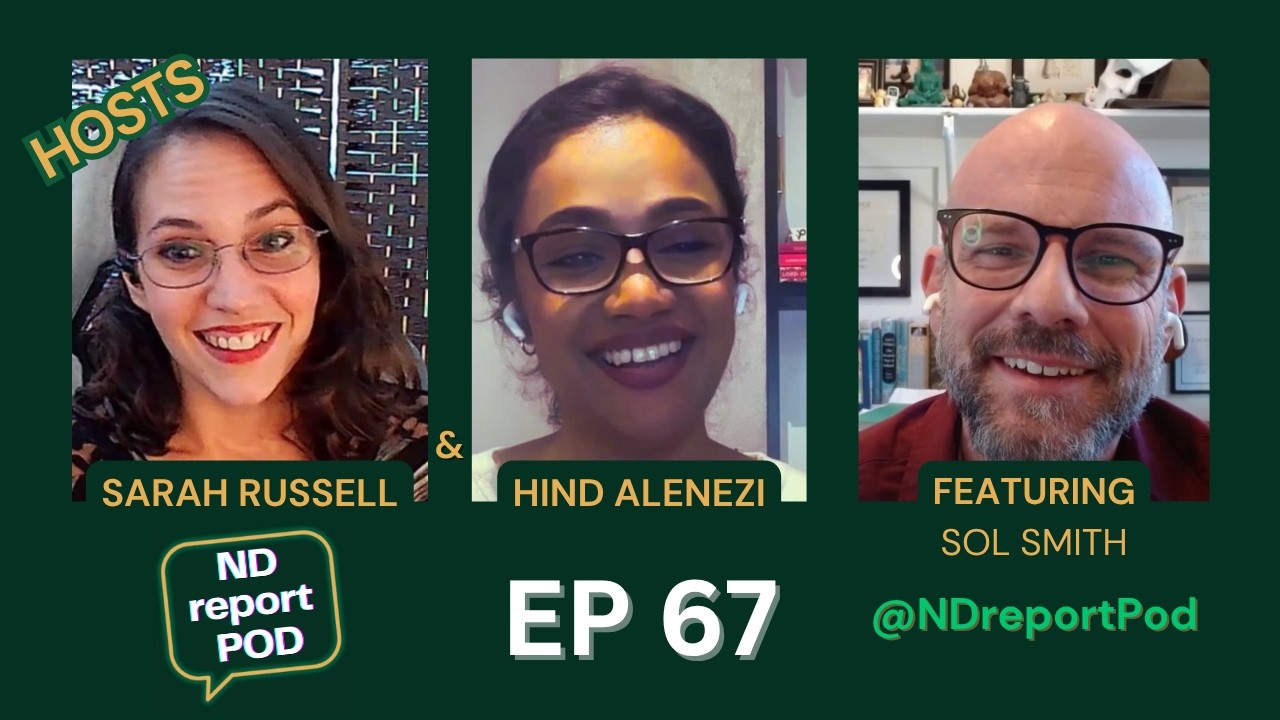
- Episode 67: ADHDer's Guide to Self-Discovery: What If You Were Never the Problem?
This episode made me think a lot about how often neurodivergent people are taught that the problem is us, when sometimes the problem is the system we’re trying to fit ourselves into. We got into ADHD and autism, education, the “new leaf fallacy,” identity, unmasking, motivation, privilege, and what happens when new self-knowledge changes the way you understand your entire life. Curious what else is inside: Why a new planner, new semester, or new system can feel like the answer, until it inevitably falls apart Why traditional education can make it difficult to demonstrate what you actually know What happens when a diagnosis or new self-knowledge completely changes your understanding of your own life Why struggling within systems that weren’t designed for neurodivergent brains can turn into self-blame The chapter where we talk about schema fracture is my favorite of the entire episode. And a close second is when we acknowledge the layers to privilege within the neurodivergent community. I always appreciate Sol’s willingness to admit that experiencing parts of ADHD and Autism as strengths can result from insulating privilege in other parts of life. This episode might resonate if you: Keep trying new productivity systems and wondering why they never stick Were a “smart” kid who struggled with school anyway Are in the middle of an identity crisis or learning how to unmask post-diagnosis Have spent years wondering why you can’t just do the things like everyone else These are the same patterns I always see in new coaching clients. Neurodivergent adults can spend an enormous amount of energy trying to make themselves function according to systems that were never designed around how their brains work. Sometimes the answer isn’t building a new system. Sometimes it’s understanding why something is difficult, figuring out what actually supports your brain, and letting go of the idea that struggling means you’re failing. If you’re looking for support with that: 👉Coaching with Sarah: ndreportpod.com/coaching Looking for Sol? Website: professorsol.com Sol is the author of The ADHDer’s Guide to Self-Discovery and The Autistic’s Guide to Self-Discovery. He also offers coaching and runs an online community. https://newworldlibrary.com/product/the-adhders-guide-to-self-discovery https://newworldlibrary.com/product/the-autistics-guide-to-self-discovery
- Episode 65: Tarot Therapy for AuDHD Emotional Self-Regulation
emotionally processing my son's autism diagnosis Tarot-py & Autism This episode was recorded many moons ago. Some of you may have noticed that I slowed WAY down on posting the Neurodivergent Report this year. There are so many reasons, but let’s just say that consistency on this project was not something I could expect from myself. 😂 TL;DR: Both of my children have been diagnosed with Autism. Research suggests that when you have multiple Autistic children, the odds that you’re also Autistic go up considerably. So naturally, I responded to all of this by… pulling out my tarot cards and having a cry on camera. Because apparently that’s who I am now. Welcome back to The Neurodivergent Report podcast! 🎉 In this mini episode, I’m experimenting with what I lovingly call Tarot-py: using tarot as a tool for emotional processing, reflection, and organizing the chaos inside my own brain. The deck featured in this episode is The Light Seers Tarot by Chris-Anne. Is tarot therapy? No. Is it a substitute for actual therapy? Also no. Can it occasionally help you slow down, ask yourself better questions, and notice things your brain has been aggressively avoiding? ¯\(ツ)/¯ Maybe! 💜 💜 💜 If this episode resonated with you, you probably know what it feels like to have a whole lot happening inside your brain and absolutely no idea where to put it. That’s something I have seen a lot as a coach. Sometimes the problem isn’t that you don’t know what you’re feeling. It’s that there are seventeen feelings, twelve thoughts, three competing priorities, and one very overwhelmed nervous system all fighting for your attention at the same time. Sometimes we need a structure that helps us slow things down enough to actually hear ourselves. For me, sometimes that structure is tarot. Sometimes it’s writing. Sometimes it’s talking it out with someone who gets it. If you’re looking for that kind of support, I offer one-on-one ADHD coaching focused on executive functioning, emotional regulation, and finding strategies that actually work with your brain instead of against it. You can learn more about coaching at ndreportpod.com/coaching And if you’re not looking for coaching, that’s okay too. You can still support the show by following The Neurodivergent Report, leaving a review, or sending this episode to someone who might need a little softness today.
- Episode 64: Late-Diagnosed ADHD: Why Labels Shouldn't Become Prisons
What if the goal isn’t to find the perfect label... but to understand yourself well enough that the label becomes an asset instead of a limitation? This is a conversation with physician, pathologist, and coach Sabine O’Laughlin; we talk about adult neurodivergence, identity reconstruction, executive functioning, and the invisible systems many of us create just to keep life running. Sabine shares how decades of believing she simply “needed more discipline” eventually led her to recognize time blindness, impulsivity, and energy management in an entirely new way. One of my favorite moments is when she explains that before you can pivot, you first have to be willing to acknowledge where you actually are. That idea stayed with me long after we stopped recording. Curious what else is inside? Learn how to use your diagnosis to help inform and transform your life How late-diagnosed ADHD changed Sabine’s understanding of time blindness, hyperfocus, & fatigue How to use a playlist as a to-do list How menopause sabotaged all the coping mechanisms that had worked for years Practical grounding techniques to try and help regulate the body and brain during stressful moments This episode might resonate if you: Were diagnosed with ADHD or autism later in life and are making sense of your past Feel like productivity advice never seems to work for your brain Struggle with time blindness, impulsivity, or staying consistent with routines Are rebuilding your identity while navigating neurodivergence, chronic illness, or major life transitions This conversation reminded me how often neurodivergent adults spend years forcing themselves into systems that do not feel safe for them. The answer isn’t finding more motivation, it’s about adapting your systems. Whether that’s replacing a to-do list with something your brain actually enjoys, creating routines that work for your entire nervous system instead of triggering it, or simply giving yourself permission to stop measuring success by someone else’s standards, those small changes can completely shift how everyday life feels. That’s exactly the kind of work I help clients do in coaching. If you’re looking for support creating sustainable systems that actually feel good: https://www.ndreportpod.com/coaching Connect with Sabine O’Laughlin Website: https://sabine-olaughlin.com/ Podcast: Ancestral Autopsy https://open.spotify.com/show/4lmcmJIGReu1eEkvp473pE?si=9d408a41882f4cbc
- Episode 63: Neurodivergent Health: Your Environment Matters More Than You Think
40 years of chronic pain from Cerebral Palsy... vanished in a warmer climate!!! This episode completely validates the bidirectional relationship between our bodies, our environments, and the stories we tell ourselves about what we can do. We got into how our external climate can completely change someone's experience of disability, chronic pain, and neurodivergent health. And honestly, I am still wondering if many of us are trying to fix ourselves instead of asking whether our surroundings actually support us. We talk about adult neurodivergence, chronic pain, and identity reconstruction, especially for neurodivergent adults trying to build a life that works with their nervous system instead of constantly fighting it. Curious what else is inside: Why your environment can have a profound impact on chronic pain, energy, and neurodivergent emotional health How Mikael's "1% Rule" offers a sustainable approach to personal growth without chasing perfection Why diagnostic labels can provide valuable information without defining who you are There is a powerful moment where Mikael describes moving from Sweden to Thailand and realizing that decades of chronic pain weren't simply something he had to accept forever. This episode might resonate if you: Feel like you're constantly pushing through environments and activities that leave you exhausted or dysregulated Are learning to harness your adult neurodivergence despite chronic illness, disability, or mental health challenges Are rebuilding your identity after a diagnosis or searching for support as a neurodivergent individual This is something I see a lot in coaching too. Many neurodivergent adults assume they're struggling because they aren't disciplined enough, when what they're really missing is an environment that supports their nervous system. We spend so much time adapting ourselves that we rarely stop to ask whether our home, work, relationships, or routines are actually designed for our wellbeing. If that is you, remember that creating a life that fits your brain and body isn't giving up. It's one of the most compassionate things you can do for your long-term mental health and neurodivergence journey. If you're looking for support with that: 👉 Coaching Looking for Mikael Avatar? https://mikaelavatar.com/ https://www.youtube.com/@MikaelAvatarStjernvall https://www.instagram.com/mikaelavatar/
- Episode 62: What is Art Therapy & How to make ugly art w/ Jackie Schuld
This episode is full of instructions and strategies for creating an accessible art therapy practice. We got into the fundamentals of art therapy and its intersection with radical acceptance; this will be especially valuable for anyone curious about how various creative modalities can help us process what talk therapy sometimes misses. Curious what else is inside: Why creating "intentionally ugly" art is a powerful exercise in moving through discomfort How to look at emotional waves as a reality to accommodate rather than a problem to solve Practical, cheap ways to invite creativity & experimentation back into your routine using what’s already in your home There is a beautiful breakthrough moment where Jackie explains that the goal isn't about the final product on the wall, but watching how you handle the process of making it. And another where we unpack how we desperately need transition buffers instead of expecting our brains to instantly pivot from chaos to calm. This episode might resonate if you: Constantly spiral into perfectionism or feel uncomfortable when a project looks messy Feel overwhelmed by tools and choices to the point of creative paralysis Are looking for somatic, experiential ways to release stuck emotional energy This is something I see a lot in coaching too. We get so trapped in the planning and analyzing phase of our lives that we completely strip away our own permission to just mess around, investigate, and see what happens without a grade attached to it. If that is you, remember that you don't have to execute perfectly on every single thought to be a valid, creative human. It is entirely okay to just let things be experimental. If you're looking for support with that: 👉 https://www.ndreportpod.com/coaching Looking for Jackie Schuld? Website: https://www.jackieschuld.com/ Books: https://medium.com/@jackieschuld https://jackieschuld.substack.com/ https://www.jackieschuld.com/books
- Episode 61: Anti-Fat Bias, Autism & Intersectionality with Zoe John-Kay
This convo has me thinking about how often we size up those we interact with, be it subconscious or intentional. We talk gender identity, intersectionality, and autism; imagine the freedom that comes from approaching confusion with curiosity instead of trying to force compliance. Curious what else is inside: • What is anti-fat bias and why it's harmful for every body size • How identity exploration can be approached gently • Tune in for a powerful analogy for understanding communication differences between neurodivergent and neurotypical people This episode might resonate if you: • Have ever felt rejected and struggled to understand why • Are exploring your identity, diagnosis, gender, sexuality, or place in the world • Want a more compassionate framework for understanding yourself and others In coaching, I attract people who feel pressure to "fix" themselves as quickly as possible. They want certainty, a label, or a final answer. But self-understanding is usually much messier than that. If this feels like you, you do not need to have everything figured out today. Practice makes progress. 👉 Neurodivergence Coaching with Sarah Looking for Zoe John-Kay? Website: therapywithzoe.co.uk Instagram: @therapy_with_zoe Resources: Podcast: At The Intersection, Turn Left Book mentioned: Working Within Diversity by Myira Khan
- Episode 60: ADHD, Burnout & Chronic Pain: How the Nervous System Lives in the Body
This episode really made me think about my bendy body in a new way. We got into how the body and mind are connected through fascia, and honestly it transformed how I understand things like stress, ADHD, and nervous system healing. We talk about fascia, embodiment, and neurodivergence, especially for people who feel stuck in their heads or overwhelmed by their feelings. Curious what else is inside: Why “just breathe” advice does not always work on its own How ADHD brains need physical action to understand and process things The idea that your body is more fluid than solid, and why that matters There is a moment where we realize that mental overwhelm might actually be unprocessed physical tension in the body. And another where it clicks that movement is not just exercise, it is a way to process emotions. This episode might resonate if you: Feel overwhelmed by your thoughts or emotions Struggle to stay consistent unless something works right away Deal with chronic pain, fatigue, or symptoms that feel unexplained This is something I see a lot in coaching too. People try to solve everything in their minds and keep collecting information, but they do not have a way to actually use it to move forward. If that is you, you are not failing nor are you broken. You might just need a more body based way to approach life. If you're looking for compassionate support with that: 👉https://www.ndreportpod.com/coaching Looking for Anna? Website: gstbody.com Instagram: @gstbody & @annarahe
- Episode 59: Meditation 101 for Neurodivergent Minds: How to Start & Why It Works
w/ Kelly Smith from "Mindful in Minutes" We've all been told to try meditation. But some of our brains rebel against us when we try; your brain won’t slow down, your thoughts get louder, and you just get more dysregulated. What if the problem isn’t you… but how meditation has been taught? In this episode, we explore: “But I Can’t Meditate”: Sarah and Kelly reflect on initially rejecting meditation as something their brains couldn’t do. The Strategy: Meditation as single-pointed focus (not “emptying your mind”)... and why short, guided practices work best for neurodivergent brains. Protecting Your Peace: How the nervous system, the 90-second stress response, and constant stimulation keep us stuck in fight-or-flight. Unexpected Human Detail: Goat cheese metaphors, self-doubt, and a real conversation about learning to be kinder to yourself. Key Questions Answered in the Audio: 1. How to build a meditation practice for ADHD brains? 2. What actually happens in your brain when you meditate for 8 weeks? 3. What is the purpose of meditation for neurodivergent people? Resources Mentioned: Kelly Smith’s podcast "Mindful in Minutes" Connect With Us! ndreportpod.com/contact Follow us on all the socials @NDreportpod
- The ADHD Field Guide for Adults: Grief, Identity Shifts, & Radical Self-Acceptance
Featuring: Cate Osborn & Eric Gude Authors of "The ADHD Field Guide for Adults" What happens when you finally get the thing you’ve worked toward for years before you suddenly realize you can’t sustain it? This conversation dives into the grief, identity shifts, and radical self-honesty at the heart of the ADHD experience. Understanding the ADHD Journey Living with ADHD can feel like navigating a winding road. Each twist and turn brings new challenges and revelations. In this episode, we explore the unique experiences of Cate and Eric, who share their personal journeys and insights. The Tower Moment Cate’s 2018 medical crisis and late ADHD diagnosis reframed her entire life. Meanwhile, Eric’s teenage realization that effort alone couldn’t override his brain shattered his “mind over matter” narrative. These pivotal moments shaped their understanding of themselves and their ADHD. The Identity Grief Spiral From dreams of being a Shakespeare professor to pivoting to a professional sourdough baker, we unpack the heartbreak of loving something deeply — and still having to let it go. It’s a tough but necessary part of the journey. The Field Guide Framework Their book is designed as a non-linear, shame-free resource. It teaches readers how to name their wants, needs, strengths, and limits. This approach moves away from one-size-fits-all solutions, allowing for a more personalized experience. Protecting Your Peace We discuss the importance of radical patience — with yourself, with neurotypicals, and with the parts of you that are still learning. Plus, we highlight the power of asking directly for what you want without apology. It’s all about finding your voice and advocating for your needs. The Very Human Stuff We share relatable anecdotes, from Wednesday Addams airport pickups to Renaissance festivals. There are ungraded papers from 10 years ago, sourdough at 3 AM, and the simple act of touching grass and trees to regulate. We also touch on the fear of liking something too much. These moments remind us of our shared humanity. Key Questions Answered in the Audio Why does life with ADHD feel like an ongoing cycle of grief and reinvention? How do you tell the difference between “this is hard” and “this isn’t for me”? What does it actually mean to be a fearless student of your own brain? Resources Mentioned The ADHD Field Guide for Adults by Cate Osborn & Eric Gude Website: Catieosaurus.com + national tour info Follow @Catieosaurus & @HeyGude (Eric) on TikTok/IG Cate and Eric’s Infinite Quest (podcast): Infinite Quest Podcast Sorry, I Missed This (podcast): Sorry, I Missed This Conclusion This episode is a treasure trove of insights and experiences. It’s a reminder that we’re not alone in our journeys. Embracing our unique paths can lead to greater understanding and acceptance. Connect With Us! Visit ndreportpod.com and follow us @NDreportpod on all the socials! Let’s continue this conversation and support each other on our journeys.
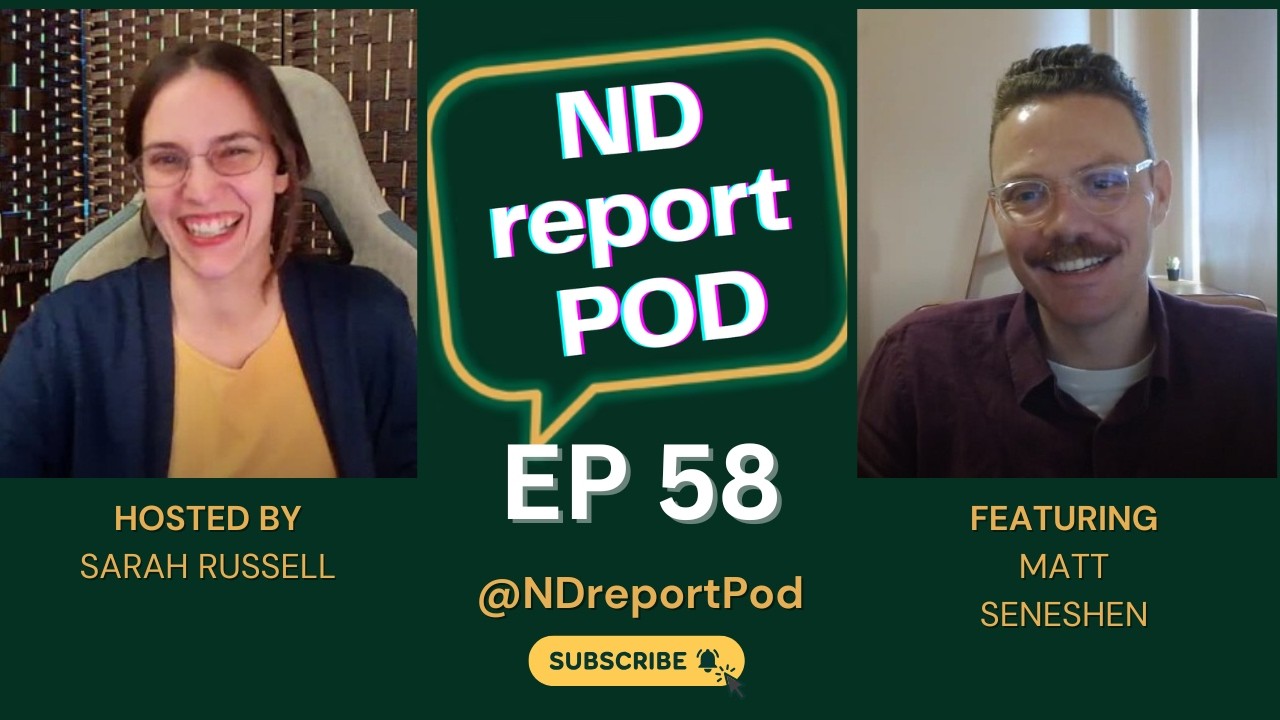
- Episode 58: Neurodiversity at Work: A Clinician Explains Why Accommodations Go Wrong & How to Do Better
Featuring Matthew Seneshen, clinical counselor & educator specializing in neurodiversity and workplace mental health How do you survive at work when the system expects you to prove you’re struggling before it offers help? In this episode, we explore: Neurodiversity & Identity Early diagnosis, dysgraphia, and processing differences Shifting from “broken” to understanding neurodivergence as natural variation Workplace Reality Why accommodations often fail in real-world settings The gap between inclusive policies and actual day-to-day experiences Stigma, “othering,” and the pressure to self-disclose Systems & Models Medical model vs. social model of disability Introducing the biopsychosocial approach to workplace support Why workplaces struggle to implement meaningful change Universal Design & Solutions Moving from individual accommodations to universal workplace design Collaborative, proactive support instead of reactive gatekeeping Why supporting all workers improves outcomes (and retention) Self-Advocacy & Boundaries How to communicate needs without over-pathologizing yourself Knowing your “line” at work before burnout hits Navigating conflict with managers and systems Mental Health & Meaning Separating your worth from productivity Values-based work and identity outside of your job Grief, burnout, and rebuilding a sense of self Key Questions Answered in the Audio: Why do workplaces require proof of struggle before offering support? How do you know in advance if an accommodation will be helpful or sustainable? How do you advocate for yourself without oversharing or stigmatizing yourself? Looking For Matt? https://walktalkcounselling.com/about Email: Contact@walktalkcounselling.com LinkedIn: https://www.linkedin.com/in/matthew-seneshen-5347ab172/ Connect With Us! ndreportpod.com/contact Follow us on all the socials @NDreportpod